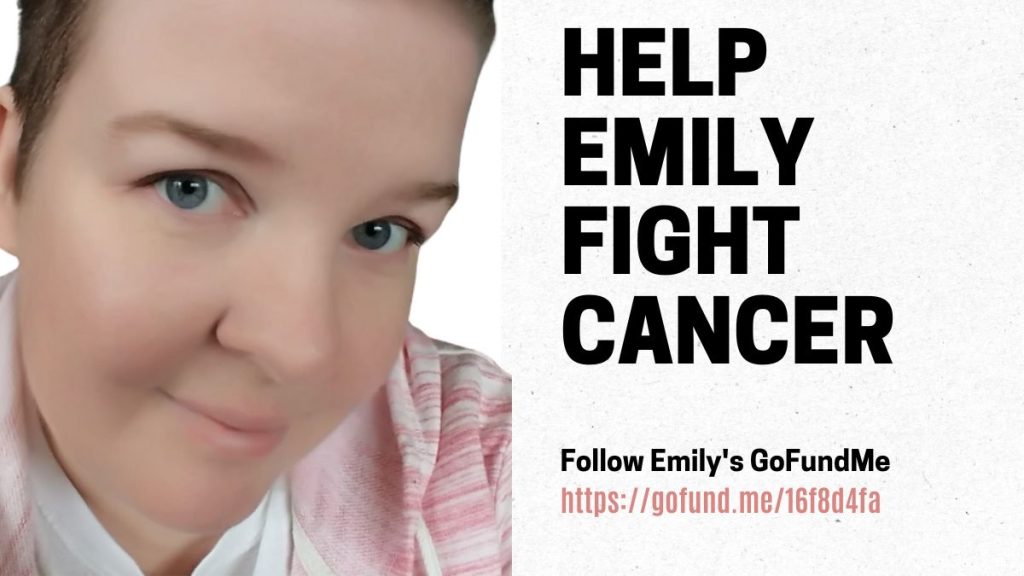
i started taking Lexapro instead of Xanax for anxiety. Xanax made me feel groggy for too long, and the sluggishness that accompanied it was sure not helping my mood or the paralyzing nature of the panic attacks and prolonged anxiety I was experience.
Wow. Is this what it’s like to not be anxious? I think I like it. What a humongous relief it is to shut off panic mode.
My mind was still racing a lot, but the thoughts were happier, not anxious or depressed.
Day 2
Panic is more noticeable today but likely same as yesterday. The shock of relief is wearing off, and I’m adjusting accordingly. Still feeling better and moving easier. Still grateful.
A lilttle bit of nausea today. I took the med with coffee but not food. (Too eager to take more and didn’t wait until breakfast was ready.)
Was up at 2 a.m. with my standard panic attack but instead of ruminating on how awful everything is I was thinking about all this stuff I might be able to do in the future.
Just this side of an IBS-D flare. I suspect adjusting to the new med has my guts feeling dubious. Plus less pain has meant a better appetite and they might be adjusting to digesting increased volume of food.
Day 3
I slept 8 straight hours! Booyah!
I feel like the mindfulness and meditation are just new skills I’m learning instead of beating myself up for doing something else wrong. It feels pretty profound, actually.
Still having panic attacks, but they aren’t triggering more panic attacks in an unending loop. I’m so relieved.
Still muscle plenty of muscle pain.
Day 4
5:30 am
I am awake after having a weird-ass dream. My muscles are incredibly tense and I am buzzing.
Nothing new, just everything is…weirder?…than usual.
It feels like withdrawals but I’m Zen about it? My brain is like, why are we not panicking anymore? We don’t know how to operate like this!
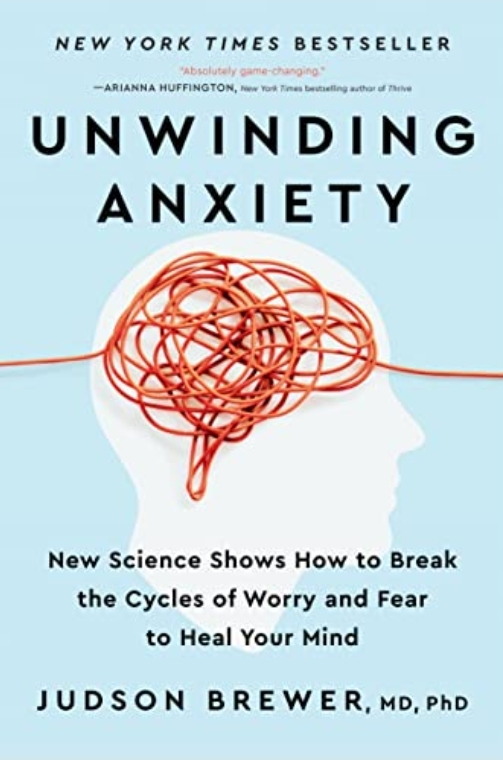
One of the books I read (Unwinding Anxiety) likened anxiety disorder to addiction. The brain essentially operates using similar mechanisms and forms a habit.
And this buzzing feels like that week I unwittingly forgot to take amitrypryline for pain because I didn’t remember to put it in my pill sorter thingy.
Take your meds, Emily.
5:30 pm
This is a rough time to deal with an anxiety disorder. Nevertheless I plod on with the Lexapro.
I hurt. I can’t tell if my muscles are residually sore or freshly spastic. Maybe both.
There was definitely a panic attack about 1:00 am, and I haven’t really felt relief yet. I thought it would have passed by now but yesterday’s news cycle was a lot, and panic might be appropriate even without an anxiety disorder.
Day 5
I feel more stable mood-wise. The first couple of days had me feeling pretty high.
Overall, I feel like it’s helping. I took a little break from mindfulness and let the med do the heavy lifting. Kinda nice, honestly.
Day 6
Today was a very typical day for me. I didn’t notice any progress, but nothing horrible either. Just kind of so-so with anxiety today.
It’s there, but it’s not constantly up in my peanut butter.
Day 7
Happy birthday to me!
No racing heart this morning and no internal buzzing sensations.
My tummy is a little tight, but it’s my birthday. I’m coddling my tastebuds today and not my IBS. If I get uncomfortably flared, I’ll accept it and ride it out.
Overall, this is the most me I’ve felt in a long time. I’m very hopeful that this med will help me move through my self-guidef anxiety therapy at a quicker pace. The sooner I can manage the anxious intensity, the better.
One thing I have been using my free trial of Spotify for is listening to audiobooks. The most recent book on anxiety I’ve listened to is Rewire Your Anxious Brain: How to Use the Neuroscience of Fear to End Anxiety, Panic, and Worry by psychologist Catherine Pittman and author Elizabeth Karle.
On Amazon the book is marked “therapist recommended.” Though for me the Spotify algorithm suggested it, I can totally believe therapists would want people with anxiety disorders to have this information.
As always, my reviews are offered with the understanding you’ll make your own damn choices. I blog about my experiences, and hope that’s helpful when it’s time to decide what things are worth your money and energy.
The Neuroscience of Anxiety
This book was even better than Unwinding Anxiety at explaining to me how my brain works. Particularly the two paths that lead to my experience of generalized anxiety disorder: cortex-based and amygdala-based anxiety.
Anxiety that originates in my cortex is borne of obsessive thinking, whereas my amygdala doesn’t bother with that weak-ass thinking stuff and just launches into anxious default override mode at what feels like the slightest provocation. Or even no provocation at all.
Where other aurhors I’ve read haven’t bothered with detailing this distinction, I found it immensely helpful and satisfying to have a “why” to offer myself when some techniques worked better than others at alleviating worry, panic, and anxiety.
Sometimes my anxieties knock politely, and sometimes they bust through a wall like the Kool-Aid Man.
Self-Assesments
At a couple of different points, I thought to myself, “Holy shit, you have been through it, girl.” During one of the self-assessment portions, I realized that I was having panic attacks—not just garden variety anxiety, but rapid heartbeat, dizziness, paralysis, etc—daily for most of 2024. And sometimes these attacks lasted for hours.
That’s why there were no reported changes to my brain tumor on MRIs. Anxiety was a condition I’d been unwittingly nurturing since childhood, and the brain cancer was just more fodder.
I woke up every morning for months in sheer terror. And my oncologist—bless his quite thorough, helpful, and knowledgeable heart—gave me fuel to reinforce the panic with each new biopsy until I became a shell of a human with a soft, fearful middle.
Anxiety Exercises
Knowing why the exercises would help and how I could expect to feel as a result made trying them easier.
For example, I realized that immersion therapy appealed to me for handling my fear of falling. However, by bailing on my standing at the first sign of vertigo, the amygdala wasn’t understanding I was safe.
Instead it was reinforcing what it remembered about protecting my body: don’t move and nobody gets hurt.
The realization that I need to ride out the panic coupled with the requisite mindfulness (internalizing different sensations) gives me hope that I can continue figuring this stuff out through independent study.
Anxiety Medication
The basic information I got about different anxiety meds and how they work has helped me in two ways: I know why I don’t like Xanax, and I’m not fearful of trying something else in the future.
GAD had programmed my brain to freak out over everything, including new medications. Now that my lizard brain understands the meds aren’t going to kill me, my cortex can chill out and stop trying so hard to convince myself meds are not a threat.
(Incidentally, unwinding anxiety is the best metaphor for how this junk is all tangled up in my brain like a trunk full of last year’s Christmas lights. Absolute perfection.)
Overall I found this book helpful, particularly as someone who experiences severe anxiety, disability from anxiety and cancer, and an unceasing desire to understand how things work.
Worry is my Anxiety Skinner Box. If you don’t know what I mean by Skinner Box, watch this:
The first time Skinner Box conditioning found me in a significant way was probably in 2016. I got worked up about my undiagnosis-turned-misdiagnosis, seemingly unending appointments with unreasonable doctors, and credited myself and my worry for a brain tumor discovery that took too damn long.
As a result, my lizard brain rationalized that health anxiety led to an eventually-accurate diagnosis and saved my life. My rational brain was like, “Yeah, that tracks,” and my collective brain automatically behaved like that non-zero chance was a certainty for everything in perpetuity because it likes the convenience of patterns (also known as jumping to conclusions). Et voila. Brain damage done.
Then in 2022, some unusual gray matter showed up on a follow-up MRI. That’s when I felt the physical-ness of anxiety all the way in my bones. There was a chance the cancer was doing its thing again, and I was so scared I thought I’d puke.
I went back on Temodar (chemo) after I’d had a horrible, sort-of-allergic, near-death reaction to it. (An allergist thought maybe it was DRESS but was noncommittal because there wasn’t much literature to back her up.*) That trauma unfolded during adjuvant treatment in 2017. So in 2022, I was not only scared of the inoperable tumor but also the prescribed treatment. The blue-lipped, no circulation style PTSD kicked in hard. So hard.**
I was not in a good place, mentally or otherwise. And instead of being scared out loud in a public way, I was hella scared in my head and fucking pissed off to boot.
Not that I didn’t have very good reasons to be angry given that Nazis and fascism were en vogue then too, but that unending cycle of worried outrage paired with routine cancer shit was eating me alive.
As it turned out, the possible tumor growth that showed in imaging was likely necrosis from radiation therapy in 2017.
Thing is, oncologists don’t really know what’s necrosis and what’s cancer on a scan. (And I was a hard “no” on another biopsy.) With brain stem tumors, even slow-growing ones like the uninvited guest in my head, the general consensus is: don’t fuck around, and then find out. That is, treat it like it’s cancer growth; wait and see if that was the case.
So even though the ireggularity appeared to have been necrosis, I got to relive some chemo trauma anyway … as a treat. So my brain basically wrote the following loop and generalized it for subsequent use:
scan > worry > not cancer
Fucking Brain Clippy was then like “Hey, looks like worry helped this one time. Want me to help you with generalized anxiety disorder?” But it wasn’t a question so much as a directive.
Naturally (literally “naturally”, not sarcastically “naturally”) I worried about everything.
And then I had eleventy bajillion more cancer scares in 2024, and between the possible brain tumor reboot, the giant lymph nodes, and the lung nodule, a pattern was firmly established: worry and it probably won’t be more cancer.
It’s so fucked up.
Anyway, bottom line for the uninitiated (those who haven’t dealt with GAD or read something like Unwinding Anxiety) is that with anxiety attacks, my primitive brain is more efficient than it is helpful. Automatically jumping to conclusions that are very hard for my thinking brain to undo in order to, I dunno, save itself from being eaten by saber tooth tigers. (Or ravaged by face-eating leopards?)
But the sooner I understand my lizard brain is calling the shots, the sooner I recognize the Anxiety Skinner Box and the shorter the anxiety attacks.
I guess early detection is for more than mammograms and colonoscopies. The more you know and all that jazz.
This post contains affiliate links.
* The joys of rare cancers and diseases are that no one is sure about, well, anything really. Those that are confident? Ninety-nine percent chance they’re just arrogant AF.
** Holy shit. The drug reaction I recounted in that linked post is JUST like my anxiety response. Down to the muffled sounds and the inability to walk. I hadn’t made the connection on that level until now. The biggest difference is the stress registers further along in my GI tract now.
I took an ADA shower today. I haven’t talked about it much, but I’ve been scared to take a shower for a while. In an attempt to make it easier on myself, I’ve tried to figure out why. The hope was that if I could figure out why, I could work on not being scared of it.
My theories are 1.) I am afraid of falling*, and 2.) I’m put off by the sensory overload. The water hurts, the room is cold and loud, and for 12-24 hours post-shower I have shivers and extreme body temp dysregulation. Like I’m in shock.
The reasons I don’t think the muscle spasms and paralysis that make me unsteady are tumor-related are: MRIs show my tumor is unchanged, and I can move more fluidly in the mornings after I wake up. But the improvement only lasts until I’m fully awake.
(I’ve tried Xanax and weed, they make me weaker and dizzier.)
Working with my anxiety has made things better, but almost imperceptibly so. It doesn’t help that I feel like this is all my fault. See, I thought I knew what I wanted when the bathroom was finished, and my brother specified an ADA-compliant fixture that fit my request exactly.
But it doesn’t work for me anymore, and we’ve only been here about two years. I wanted something that would accommodate me if I needed a wheelchair. And, I don’t know, maybe I need one, but I don’t use one in the house. So getting in and out of the shower is terrifying, even with grab bars.
Anxious Me wonders if I was planning too far ahead again, by thinking I needed this shower. Dan hates it, and understandably so, but his stress adds to my own self-loathing, I cringe and tense just hearing the water turned on now.
Mom would let me bathe upstairs in a heartbeat, but I don’t think it’ll do my mental health any good to list the reasons why even with one of those swivel chairs, her fixtures are a physical impossibility in my current state.
I daydream sometimes about getting one of those walk-in tubs, but I don’t have money. And the contractor basically told us back in the day the current shower wasn’t coming out in one piece. (Not maliciously; it came up in conversation.)
So in addition to not having the money, I’d feel guilty about having to destroy the very expensive existing one (which I fundraised for) to install a different model.
Plus, I can’t help but wonder if I’m still just clueless about what I need. Nothing like having a second ADA fixture put in only to realize that’s not helping me either.
I make do with bath cloths and spread out the showers until I feel disgusted with myself, but I don’t think that’s helping me relax.
I dunno. I’m not expecting someone to trundle a long with a solution. I just wanted to write about what’s on my mind.
* It’s been a while since I’ve fallen, but my anxiety is convinced that’s because I only get out of bed when I need to and don’t risk anything otherwise. Some of the falls I have taken were severely traumatic.
Something I’ve come to realize is that the villains in my mind appear larger than they actually are. Is that just me being me, or is that the nature of trauma? All I know is that when I take a closer look these days, I see tiny villains where giant evils once loomed.
Maybe this is what E. Jean Carroll was describing in her interview when she said of Trump “He’s nothing.”
Maybe I’ve been conflating the effect of the harm perpetrated by the perpetrator with the actual perpetrator.
Like, yes, the Rheumatologist from Hell was a terrible doctor, but is he statistically significant? Should I develop anxiety over being misunderstood by all doctors? Is that level of caution necessary to my survival now?
It’s hard to be too hard on myself—given how seriously, life-threateningly wrong that doctor was—but I do feel like I’m asking important questions.
Another example: Rodney’s* asshole-ish nature infiltrated such a large space in my brain when we were married, but when I stop and think about how I’ve been divorced from him three times as long as I was married to him, the math kind of blows my mind.
My life’s villains are tiny yet taking up an outsized amount of space in my brain. I’ve got a tumor, I need to reclaim that space.
I despise the triteness of telling someone else something’s living rent-free in their head because although it’s often true, it’s decidedly unhelpful. Even where the stakes are much lower than, like, having brain cancer.
I think what I’m struggling with now is the desire for my tiny villains to acknowledge what they did to me, but they were there. They know.
And if I see them rationalizing their behavior, it’s only because I imagine it. I could just as easily imagine them contrite and remorseful.
The movie Ever After: A Cinderella Story is on Disney+ now, and I watched it for the first time in twenty-something years today.
I’ve seen all the damsel in distress jokes made by the feminists of Twitter. And there’s certainly a point to be made about how Sleeping Beauty couldn’t consent to that kiss. How Beauty and the Beast was really a story about Stockholm Syndrome. And Snow White’s stepmother was just a garden variety narcissist.
Today, though, I was struck by how real the villains are in the Cinderella retelling. Just classic abuse staring me straight in the face. I didn’t pick up on it at all then.
Ever After came out in 1998, when I was 18, and I think the reason I liked it so much is because it was a retelling of Cinderella where the Prince acknowledged he was a jerk and Cinderella saved herself. Coupling welcome but not required.
That message was kind of novel to me in my 20s, and the empowerment of it was likely the reason I didn’t mind watching the movie weekly.
I’d come home from work on Fridays and order a delivery pizza from Papa John’s. (Hey, delivery options were limited back in the day.)
Then, being an introvert before being an introvert was cool, I’d treat myself to watching the VHS I purchased on eBay. (There were several months I couldn’t afford cable and didn’t have a TV antenna.)
True story: I watched EA so much I had to replace the VHS more than once.
Anyway, watching Ever After today was restorative, helping me reconnect and see again that not everything about the early aughts was awful.
The thing about relying too heavily on dissociating and compartmentalizing is that it can get out of hand. Takes out the baby and the bathwater, so to speak.
For whispering “less than me” while closing the lid
***
Please pardon me as I attempt to vaguebook my way through some adolescent trauma.
Today was a high pain day. Pain triggers my anxiety. And in an effort to calm my anxious mind, I sometimes trip over stuff I didn’t anticipate thinking about.
These days I don’t know if I’m needlessly re-living the past or finally coming to terms with stuff I’ve bottled up. But if I think I can sit with my feels, I do. I’m less likely to have nightmares that way.
As usual, blogging is cheaper than therapy. Some say this flippantly; I say it pragmatically.
The YouTube algorithm sent me a video on emotional abuse and reminded me that an abuser need not be present for a target to heal.
That’s empowering AF, by the way.
There’s a petty part of me that wants to run down the laundry list of degrading and manipulative wrongs I suffered as a result of this person’s insecurities.* There’s another part of me that’s been chastised one too many times for being bold and angry.
But I think right this second, if I’m blunt, I’m just not interested in defending myself to myself. I’m trying to cut back on the pointless overthinking.
*”Insecurities” might be putting it charitably. But I have discovered changing the word doesn’t alter the damage, so I’m opting to see the glass as half full. For me.
Some years ago Ben (not his real name) died. I don’t know the specifics, but I think I read about his passing through the Facebook grapevine, and overthinking about him has got me thinking I’m broken, y’all.
Ben was a classmate of mine in elementary school and was in the aforementioned gifted and talented program with me. (I brought G&T up last post.) Since fifth grade, I’ve had a pretty low opinion of Ben.
Knowing that he died, I felt cruddy about myself for harboring that grudge as an adult. But I’m starting to see my 11-year-old self differently. And, if I want to move those thoughts from an anxiety loop in my overthinking brain, I need to write about them.
So here goes nothing.
Ben is the kid who came across the hall from the library to the classroom to gleefully tell me (at Mrs. Hardass’s bidding) that I couldn’t quit G&T without a parent’s permission. (Read this, if you have no clue what I am on about.)
He also asked me “How long did this take you?” A week or two before that—at what I think could be a precipitating event.
See, I was feeling imposter syndrome before I knew imposter syndrome was a thing. I’d worked for hours on a project for G&T when I had the thought I was trying too hard, and everyone was going to notice out loud that I wasn’t genuinely smart.
(I knew I wasn’t smart because there was an in-class G&T brain teaser quiz I couldn’t noodle out. If you were smart, quizzes were easy, right?)
Anyway, after hours of labor and then hours more of imposter anxiety, I pared my project waaaaay back. Following my anxious mini presentation, a smug Ben asked me how long I spent on my project. It was an 11 year old asking another 11 year old a gotcha question.
I didn’t find it easy to forgive and forget the teacher’s pet doing me dirty like that. Did I confess how long I agonized over my mock newspaper project before realizing I wasn’t good enough?
Of course not. I was 11. I pretended that I did my best, belonged where I didn’t want to be, and Ben’s question didn’t sting. I swallowed my anxiety instead of asking for help with it.
And here I am 33 years later pretty sure I have ignored my anxiety for decades. To my own peril.
To be fair, when I was a kid and young adult, suppression was a workable strategy. But I’ve seen some stuff in the last couple of decades. I dated a manipulative predator for a while, married a compulsive liar, and worried nonstop for a few years what was wrong with me and then sat for a lot of MRIs and PET scans and CT scans and appointments I couldn’t afford while people told me how strong I was.
So now I’m stuck in an anxiety loop because I’m really mad at a dead guy.
Maybe I’m projecting, but the mood at the Cancer Center Friday was different, and after watching all four days of the DNC’s primetime convention lineup, I’m convinced it’s because we all can exhale about November. None of us need extra stuff to worry about.
I’ve been convinced Trump will lose for several months, but I’m also convinced he will lose violently. Now I’m less nervous because I have greater confidence that people are paying attention. (I am still certain he’ll be a violently sore loser until his dying day.) It’s reassuring, though, that it’s not just the vulnerable and a handful of voters saying “WTF!?” anymore.
It’s taken years to get here, but sun, sun, sun, here it comes.
Being diagnosed with brain cancer right after Trump’s 2017 inauguration was a disturbingly anxiety-inducing experience. I know I’ve said that before, but damn.
Maybe the felon’s running again coinciding with my newest, latest cancer scares has played an outsized role in my recent headlong plummet into Worry®. It sure wouldn’t be the most ridiculous thing I’ve ever considered…
So. There was a patient at the clinic wearing a red, white, and blue shirt with a U.S. Marines hat when I went to see Dr. Oncologist Friday, and I didn’t reflexively assume the worst of a Boomer white guy from “downstate” Illinois telling his phlebotomist to tell her husband he said Semper Fi.
Nature is healing, thanks to Dems reminding the world flags and patriotism don’t have to be triggering symbols of White Nationalism.
I’ve also lost 12 pounds since my last oncology visit. All this past week I’ve been wondering why the elastic waistbands blew out in all my jammies and then I was like, ohhhhhh.
Lolz.
No worries though, I was plenty overweight and still am. I’m not losing too quickly or in danger of becoming underweight. Weight loss is a real problem for some cancer patients, but not for me. Treatments and bodies vary.
In addition to less binge-y eating habits, I think worry might have physical mass, and that shedding some worry has resulted in my losing a few pounds? Maybe?
I don’t know if any of these improvements will affect my physical disabilities. I do sometimes wonder, but then I remember to be in the present.
I’ve listened to Unwinding Anxiety a few times through now. I’m reluctant to praise anything too much, because I know how isolating and depressing it can be to want relief and not find it in places where others have. This Review of Unwinding Anxiety comes with a disclaimer.
Applying Brewer’s approach to my own anxiety and IBS seems to be working for me, but it might not be as healing for you. I want you to know that I see and fully acknowledge your struggle.
I’ve been stymied by that battle for what feels like an eternity, and I only drop affiliate links to make this book easier to access if you’re curious. Not because I think there’s a miracle, one-size-fits-all cure for this shit. If nothing else, reading could lead you to discover something that helps you more. That’s all I expect anyone to get from my review today.
But listen to me: if it doesn’t help like you want, it’s not your fault. It’s so important to me that you know that.
I still have anxiety, and I will always be prone to my anxious tendencies. The difference is that now I recognize it, have tools that can help me process it, and can clearly see the benefit of applying those tools.
Like I said a few days ago, I’m not moved much by woo. I prefer hard science, and Judson Brewer broke it down for me in this book. He explained his research plainly, and I found his writing clear but thorough.
Still, I’m the type who picks up on new things every time I read—it’s like when I’m rewatching a favorite movie and I notice something for the first time. I intend to give the audiobook a third listen after the initial ideas in Unwinding Anxiety have had a little more time to simmer.
Unwinding My Own Anxiety
My earliest memorable dealings with anxiety harken back to when I was about 8. I was in bed one night trying to sleep when I thought about the story of John Henry. We’d sung a song about him in music class earlier that week.
When I thought about Henry’s death and then realized my own was inevitable, I struggled to breathe. I felt sick to my stomach and hung out by the toilet for the night. It was my first panic attack, and I have only this week come to understand that’s what was happening.
Unfortunately, my best friend was sleeping over that night, and she wanted to go home. Adult me totally gets it, but little me was kind of heartbroken that my best friend didn’t want to hang out. Her mom or her grandma or someone came to pick her up. I was not just feeling anxious, I was feeling rejected.
My parents tried to console me that night, but I don’t think they understood my experience because I didn’t have words to articulate my fear. Besides, even at 8 years old, I already understood that I should probably just get a grip.
I got that same anxious feeling in my gut about Gifted & Talented class and tried to quit. But the G&T teacher was a hardass. She told me I couldn’t quit unless my parents wrote a note. I thought I’d be a disappointment to them—and I didn’t want to break their hearts—so I stayed in the program and never again brought it up.
And so it went for another 36 years.
I knew when I got stressed and anxious, my IBS would show up, but I had no clue I had developed full-blown generalized anxiety disorder until I heard Brewer define it. Then I remembered the joke I saw on Twitter about all the G&T kids being perfectionists with anxiety.
Hahahaha. Heh.
*nervously glances around room*
That plus recalling Dr. Pulmonologist recently noting the connection between IBS and anxiety caused me to have a lightbulb moment while listening to Unwinding Anxiety.
If I didn’t have a brain tumor to worry about, I might have put the pieces together sooner. After all, I have been diagnosed with anxiety because of my health.
Detailing My Anxiety Loops
Trying to get the anxiety and IBS to stop without understanding the connection was futile. My chronic illness and the physical manifestations of my GAD, were woven too tightly together.
With each new physical symptom, I’d spiral and feed the anxious habits I’d been actively suppressing for a lifetime. Every new doctor’s appointment made it all worse.
The constant internal battle over needing to know what was wrong with me but also needing to not have another expensive doctor’s appointment drain my bank account magnified my anxiety and made my IBS an even bigger problem. To the point I was noticing disordered eating in an attempt not to shit my pants. Sometimes not wanting to eat at all. When I would finally give in and eat because I knew I needed calories to stay alive, there would be even more severe consequences.
When Mom would join us for a meal, I’d stress about getting to the bathroom in time after eating. Or I’d fret about choosing the “wrong” food when ordering takeout, et voilá. I’d give the IBS something to IBS about. I’d try to identify trigger foods only to realize everything caused GI distress and be certain I was hopelessly broken. The suffering was endless.
Also? “You have cancer, we should see if this is cancer too” every few weeks might have been medically sound advice, but it was disastrous for my mental health. My doctors and I didn’t know what we didn’t know.
Pausing My Catastrophic Spirals
Garden variety anxiety had been on my radar for a while. So I tried earnestly to meditate myself to calm. The problem was that my anxiety had anxiety, as they say. Or, put another way, I was anxious I’d be anxious again. I was a hot mess.
I’m still a hot mess, if I’m honest. But Unwinding Anxiety has helped me understand what triggers my anxiety loops, why just mapping the loops helps, and how a subtle shift in how I meditate gets me to recognize what’s happening and press pause on the unraveling.
My brain has always been trying to help, since I was a kid, but I ended up very literally addicted to worry.
Evidence My Anxiety Was Exacerbating My IBS
Grasping for answers made me feel worse. Nothing is clearer to me now. Brewer encourages the anxious who try his approach to not just scrutinize his evidence, but look for their own.
I’m wary of things helping for a short time and ceasing to be therapeutic, BUT
My guts aren’t as inflamed. Which means my lungs have more room to expand and my breathing isn’t as shallow as it was just last week.
I can also hug both of my knees to my chest without any pain in my abdomen—something that inflammation and excruciating pain had made impossible for the last couple of years.
I am still eating “bad” foods, but my IBS-D episodes are farther between and less severe. I haven’t had an IBS-C bout since my first listen. Though it’s too early to say anything about IBS-C with certainty as that has always been an intermittent issue.
That level of improvement with my IBS coupled with my vastly improved mental well-being—in such a short time—is enough for me to keep on keeping on and write this long-ass post.