Unwinding Anxiety in practice is something I do when the opportunity presents itself. There’s no cramming for this life test. I resolved the anger and anxious fear triggered by my primary doctor’s recent scolding—and in record time, because of this book.
I have a new primary doctor. I realized I had a choice, and I chose not to accept the added burden of dealing with a doctor who thought I deserved an added burden.
Like usual, I wondered for too long whether I was the problem, but in examining my other doctor-patient relationships, it became obvious that no one else was sending me paternalistic messages in my patient portal.
I had to keep reminding myself, I’m not her enemy; I’m job security. But once that truth took hold…
Once I internalized the truth instead of the fear, I was able to place a phone call to a patient advocate and get things sorted out right away.
Now I have a doctor that is physically closer, afiliated with the same hospital system as my oncologist and uses the same patient portal, AND offers me appointment waitlist options by text.
Honestly, this would be better for me even if my old primary doctor was perfect.
I spent a fair amount of time writing and revising a reply to Dr Scold that I’ve opted not to send. In my experience this kind of self-defense usually carries with it the potential for another interaction. Not really looking for that, to be honest. I prefer to set firmer boundaries.
So I’m publishing my reply here as closure and therapy without including the doctor’s real name.
Might as well get a couple of ad impressions for my trouble, right?
Also—and maybe this is pessimistic—but I think I have a better chance of improving experiences if I post a review for patients than if I explain myself to Dr. Scold. I revised my initially glowing review of her online to one that also reflects my newfound discovery.
I feel good about putting this behind me and moving past the anxiety of it all. I feel good for being able to find my way out of this fear of abandonment.
Because that’s how my lizard brain interprets these things post-2014. That unless I crack the code and conform to unspoken rules or expectations, I won’t be believed by the only people who can help.
Man, fuck that noise.
The reply:
I am not new to disability, but I am new to this level of disability.
I don’t know what information didn’t get communicated on your side, but I imagine it was significant after discovering how much was missing on my side.
Your message was the first time any of the handful of people I’d communicated with at AMG had relayed any information regarding 3 to 6 month office visits for levothyroxine. In addition to being on this medication for over 25 years without such requirements, I have limits. Ignoring them comes with physical and mental consequences.
The difference between the thyroid labs ordered by you versus those ordered by my oncologist were not communicated until your paternalistic scolding.
A couple of months ago, I waited by my phone for a telehealth appointment that never happened. I considered it a forgivable oversight then but wonder now how frequently things are missed or lost in translation and then blamed on the patient.
No one ever offered even an unexplained “no” to my refill requests. Retrospectively, it feels like I was expected to intuit what everyone else was thinking.
It was insulting to have my life reduced to a “situation.” I didn’t need favors or “leniency.” I needed feasible solutions to specific needs.
Wondering where I stand with a physician requires energy I simply don’t possess. My medical anxiety, which I work to minimize, becomes overwhelming when I have to guess what other people need.
I wish you well. I will not be returning to your office for care.
After my brain cancer diagnosis, I wrote a juicy memoir airing my ex-huband’s liar-stained laundry. I’m over the drama, but I might as well get something for my trouble, right?
He tried to gaslight me once about its contents, insinuating I was the liar or misremembering when I had intentionally obscured details.
When that didn’t get me to doubt myself, he promised to help me market my book. Yes, even after all the laughable Author Solutions drama he started.
When his offer to make me internet famous didn’t get me fawning over his generosity, I reached into my very effective Rodney repellent toolkit and blogged about him some more.
As if on cue, he scurried away from the truth like vampires running from daylight.
Who You Gonna Believe is “pretty good story telling,” he wrote via my contact form as I recovered from more chemo.
Anyway, it’s tiresome to promote this book because I am cancer weary and just generally not interested in book promotion. But money is tight after more health insurance shenanigans, so here I am. Asking you to tell a friend about it or read it if you haven’t yet.
(It’s free with ads. You don’t have to give up money to help me buy Dan’s meds this month.)
You can read the whole ebook—did I mention it’s free and infuriatingly funny?—on this website, right this very second.
Or you can subscribe to my Substack and get it delivered one chapter at a time, on the first of every month, to your email inbox.
Here’s an excerpt from Chapter 4: Liar, Liar:
I was born on March 4, 1980 at Gibson General Hospital with a fully functioning bullshit detector. I didn’t know how to use it, or even that I had one, until my mid-twenties though. Here’s how I discovered it:
One Tuesday circa 2006 or 2007 (I could probably pin down an exact date if I had the energy to dig, but I don’t) I was driving home from my part-time job at The Saturday Evening Post. Light from a Long John Silver’s sign reflected off the windshield of my Malibu and the AC vents pulled in hints of fried fish and seasoned salt. I was having some super serious dinner thoughts while waiting for the light to turn green when my cell phone started ringing. It was Rodney’s ringtone. I couldn’t dig it out of my bag. I was driving.
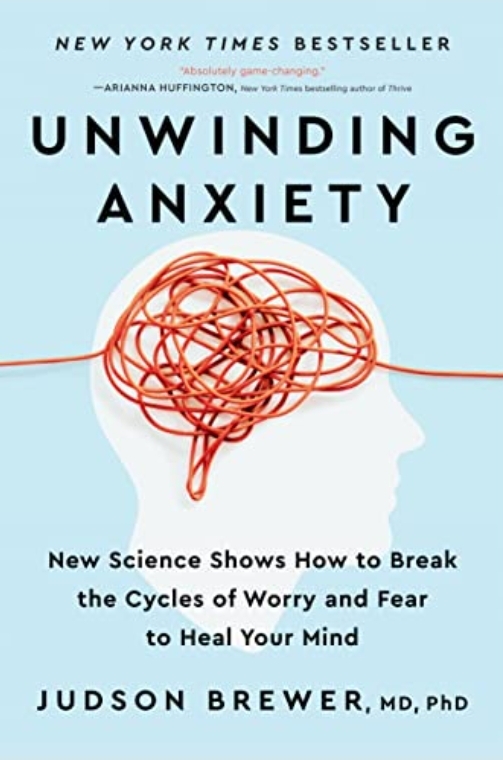
I’ve listened to Unwinding Anxiety a few times through now. I’m reluctant to praise anything too much, because I know how isolating and depressing it can be to want relief and not find it in places where others have. This Review of Unwinding Anxiety comes with a disclaimer.
Applying Brewer’s approach to my own anxiety and IBS seems to be working for me, but it might not be as healing for you. I want you to know that I see and fully acknowledge your struggle.
I’ve been stymied by that battle for what feels like an eternity, and I only drop affiliate links to make this book easier to access if you’re curious. Not because I think there’s a miracle, one-size-fits-all cure for this shit. If nothing else, reading could lead you to discover something that helps you more. That’s all I expect anyone to get from my review today.
But listen to me: if it doesn’t help like you want, it’s not your fault. It’s so important to me that you know that.
I still have anxiety, and I will always be prone to my anxious tendencies. The difference is that now I recognize it, have tools that can help me process it, and can clearly see the benefit of applying those tools.
Like I said a few days ago, I’m not moved much by woo. I prefer hard science, and Judson Brewer broke it down for me in this book. He explained his research plainly, and I found his writing clear but thorough.
Still, I’m the type who picks up on new things every time I read—it’s like when I’m rewatching a favorite movie and I notice something for the first time. I intend to give the audiobook a third listen after the initial ideas in Unwinding Anxiety have had a little more time to simmer.
Unwinding My Own Anxiety
My earliest memorable dealings with anxiety harken back to when I was about 8. I was in bed one night trying to sleep when I thought about the story of John Henry. We’d sung a song about him in music class earlier that week.
When I thought about Henry’s death and then realized my own was inevitable, I struggled to breathe. I felt sick to my stomach and hung out by the toilet for the night. It was my first panic attack, and I have only this week come to understand that’s what was happening.
Unfortunately, my best friend was sleeping over that night, and she wanted to go home. Adult me totally gets it, but little me was kind of heartbroken that my best friend didn’t want to hang out. Her mom or her grandma or someone came to pick her up. I was not just feeling anxious, I was feeling rejected.
My parents tried to console me that night, but I don’t think they understood my experience because I didn’t have words to articulate my fear. Besides, even at 8 years old, I already understood that I should probably just get a grip.
I got that same anxious feeling in my gut about Gifted & Talented class and tried to quit. But the G&T teacher was a hardass. She told me I couldn’t quit unless my parents wrote a note. I thought I’d be a disappointment to them—and I didn’t want to break their hearts—so I stayed in the program and never again brought it up.
And so it went for another 36 years.
I knew when I got stressed and anxious, my IBS would show up, but I had no clue I had developed full-blown generalized anxiety disorder until I heard Brewer define it. Then I remembered the joke I saw on Twitter about all the G&T kids being perfectionists with anxiety.
Hahahaha. Heh.
*nervously glances around room*
That plus recalling Dr. Pulmonologist recently noting the connection between IBS and anxiety caused me to have a lightbulb moment while listening to Unwinding Anxiety.
If I didn’t have a brain tumor to worry about, I might have put the pieces together sooner. After all, I have been diagnosed with anxiety because of my health.
Detailing My Anxiety Loops
Trying to get the anxiety and IBS to stop without understanding the connection was futile. My chronic illness and the physical manifestations of my GAD, were woven too tightly together.
With each new physical symptom, I’d spiral and feed the anxious habits I’d been actively suppressing for a lifetime. Every new doctor’s appointment made it all worse.
The constant internal battle over needing to know what was wrong with me but also needing to not have another expensive doctor’s appointment drain my bank account magnified my anxiety and made my IBS an even bigger problem. To the point I was noticing disordered eating in an attempt not to shit my pants. Sometimes not wanting to eat at all. When I would finally give in and eat because I knew I needed calories to stay alive, there would be even more severe consequences.
When Mom would join us for a meal, I’d stress about getting to the bathroom in time after eating. Or I’d fret about choosing the “wrong” food when ordering takeout, et voilá. I’d give the IBS something to IBS about. I’d try to identify trigger foods only to realize everything caused GI distress and be certain I was hopelessly broken. The suffering was endless.
Also? “You have cancer, we should see if this is cancer too” every few weeks might have been medically sound advice, but it was disastrous for my mental health. My doctors and I didn’t know what we didn’t know.
Pausing My Catastrophic Spirals
Garden variety anxiety had been on my radar for a while. So I tried earnestly to meditate myself to calm. The problem was that my anxiety had anxiety, as they say. Or, put another way, I was anxious I’d be anxious again. I was a hot mess.
I’m still a hot mess, if I’m honest. But Unwinding Anxiety has helped me understand what triggers my anxiety loops, why just mapping the loops helps, and how a subtle shift in how I meditate gets me to recognize what’s happening and press pause on the unraveling.
My brain has always been trying to help, since I was a kid, but I ended up very literally addicted to worry.
Evidence My Anxiety Was Exacerbating My IBS
Grasping for answers made me feel worse. Nothing is clearer to me now. Brewer encourages the anxious who try his approach to not just scrutinize his evidence, but look for their own.
I’m wary of things helping for a short time and ceasing to be therapeutic, BUT
My guts aren’t as inflamed. Which means my lungs have more room to expand and my breathing isn’t as shallow as it was just last week.
I can also hug both of my knees to my chest without any pain in my abdomen—something that inflammation and excruciating pain had made impossible for the last couple of years.
I am still eating “bad” foods, but my IBS-D episodes are farther between and less severe. I haven’t had an IBS-C bout since my first listen. Though it’s too early to say anything about IBS-C with certainty as that has always been an intermittent issue.
That level of improvement with my IBS coupled with my vastly improved mental well-being—in such a short time—is enough for me to keep on keeping on and write this long-ass post.
I spent all day yesterday listening to the UnwindingAnxiety audiobook by Judson Brewer. It had been on my radar for a while after he was a guest on Tara Brach’s podcast, but, you know, money. I was getting desperate about my mental health though.
Anyway, Unwinding Anxiety was very helpful for me, because there’s so much woo out there when it comes to learning about mindfulness and meditation. Brewer is an MD and PhD (like the neurosurgeon who cut my head open in 2017) and there was so much science in his approach, I was darn near giddy.
I know some people prefer a more spiritual approach to these things, but that is not me. I sometimes filter through the spiritual silt for the nuggets, but when I don’t have to spend energy on that? Praise cheezus.
Let’s just say it was worth every penny of the $13 it cost me to get that book. Bonus points that I can listen from bed.
By the way, I made this wallpaper for my phone’s lock screen after listening. Feel free to save it to your phone if you think it could help. I’m much less inclined to be on social media these days, but I do still look at my screen more frequently than I’d like. Maybe this will help me create space, as they say.
Brewer is from Indianapolis, experienced IBS, and mentioned how well Western medicine handled brain tumors in chapter 20. Those random connections in some way comforted my anxious mind.
Speaking of anxiety (Because I never do that. Ha!) I am now pretty sure—after reading Brewer’s book—that what I have is generalized anxiety disorder. However, seeking an official diagnosis in a clinical setting is the last thing I need at the moment.
Just learning how my anxious brain works is progress. I think working at identifying my anxiety loops and recognizing when it’s time to place the proverbial sticks in their spokes will get me to a place where I can make a better decision about whether seeing a psychiatrist is warranted.
I’m not opposed to the idea. But money and other triggers are always a concern.
I have to channel all this hope somewhere, so I’ve been reading and contemplating lupus the last 36 hours or so since my appointment with the rheumatologist.
I have been muddling over the best way to characterize what’s going on with me healthwise. I want to talk about it in the easiest way without mischaracterizing the details for new visitors.
So here’s the deal. I’m going to call this collection of progressively horrible symptoms I’ve been experiencing for the last couple of years lupus with an asterisk.
The asterisk meaning the diagnosis isn’t official. It’s just that my particular brand of autoimmune dysfunction aligns best with that diagnosis for now, and I don’t want to mess with the caveats every time I blog.
I’ll just link back to this page, and let people read what they find useful. Of course I understand this Dx could change at anytime, but someone who lands here through a search, for example, might benefit from some context.
Drug-induced Lupus
But for Temodar, I don’t think I’d be contemplating a lupus diagnosis at all. I believe that chemotherapy further freaked out my immune system when the cancer already had it confused.
Just based on anecdotal family history, I think I was genetically predisposed to autoimmune shenanigans.
There’s such a thing as drug-induced lupus, and that makes the most sense to me. I don’t have any scientific proof of that claim; it’s just my best working theory. I’m not a medical professional, but I’m a professional chronic illness patient from way back.
In 2017, I had an ER-level reaction to the increased dose of Temodar that was supposed to kick off adjuvant chemotherapy, and a surprise reaction to sulfa antibiotics shortly thereafter. It just feels like lupus is very likely, you dig?
“Whenever possible, people with lupus should avoid taking sulfa-containing antibiotics (or sulfonamides) as these drugs can exacerbate lupus symptoms in some individuals. People with lupus are also more likely to be allergic to sulfonamides compared to the general population.”
In addition to the sulfa reaction, I’ve had various reactions to weird things that feel like allergies. Sneezing and the usual allergic malaise have come my way after being in contact with previously unremarkable stuff.
“Allergic disorders commonly occur in patients with systemic lupus erythematosus (SLE) and allergies to some drugs may occasionally be related to disease flares.”
Man, everything I eat makes me hurt now. I’ve been blogging about constipation and diarrhea for a while, too. But also there’s bloating, swelling, and constant abdominal pain I don’t detail much because I don’t know what to say. I’m miserable and too exhausted by it to elaborate.
Turns out gut stuff is not uncommon for people with lupus:
“A person living with lupus may develop intestinal issues, such as IBS. IBS can cause similar symptoms to gastroenteritis, such as abdominal pain and diarrhea.”
With the symptoms of cancer and the side effects of associated treatment, it’s hard to know what’s what. Here are some other things I experience that may or may not be lupus symptoms:
So that’s why I think I have lupus and the rheumatologist is starting me on Plaquenil (hydroxychloroquine).
When I try to make sense of why I feel so terrible at a potentially early stage of the autoimmune disease, I rationalize that my baseline was utter shit to begin with. Brain tumors are problematic like that. With that POV, lupus makes a fair bit of sense.
Still, there are symptoms I don’t have—like fever, joint inflammation, and the characteristic butterfly rash—that would help make this diagnosis easier.
Anyway, I don’t care if randos think I’m a hypochondriac, but I want people looking here for potential answers to their own medical mysteries to have a factual understanding of mine.
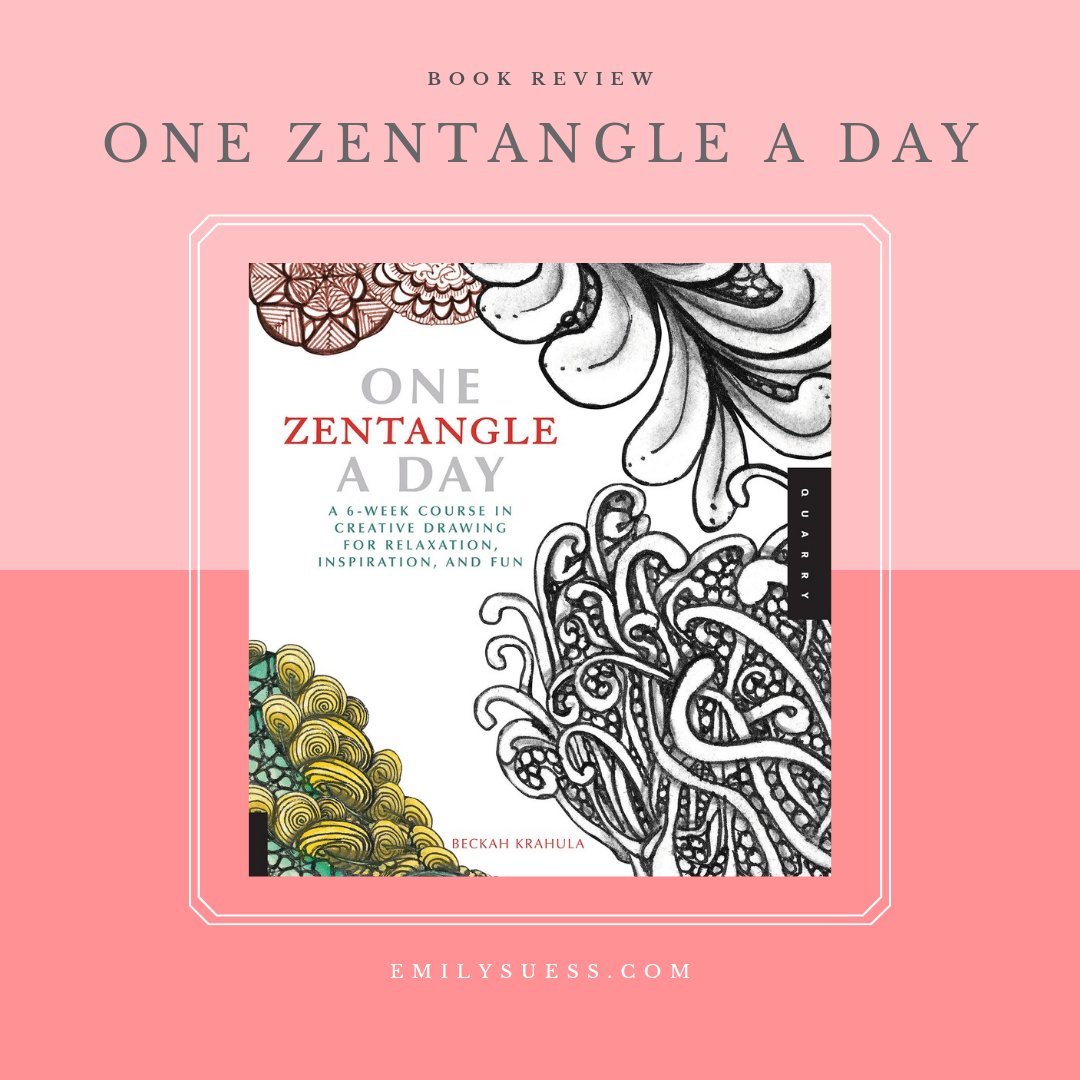
In 2018, I began my doodle art journey with the book One Zentangle a Day by artist Beckah Krahula. I’d seen some videos here and there of people turning meditative patterns into gorgeous art, and I thought to myself it looked like fun—drawing for the pure joy of it. Maybe, I thought, I could learn to Zentangle too.
Enamored with the oddly satisfying doodle art videos I’d watched on YouTube after my adjuvant cancer treatments, I decided to record my daily lessons along the way. I tried new patterns and then put them together. The results were not great at first. As I learned and improved, I realized I was also creating a really thorough review of the book.
So, if after this written review of One Zentangle a Day, you’re still undecided, there are 42 more videos on my YouTube channel to help you.
One Zentangle a Day is great for self-paced learning. The lessons are easy to complete and leave you with a sense of accomplishment each day. Explanations are detailed without being cumbersome, and the examples for using the patterns to create your own art are inspiring.
Structured daily lessons
Detailed text accompanying illustrations
More than 50 patterns
Step-by-step drawing instructions
Inspiring examples
Cons
I might be slightly biased, because it was my first foray into the world of Zentangle, but it seems to me this book has everything. Well, except the pens and paper you need to get started with Zentangle doodle art.
It’s square and doesn’t fit nicely on my bookshelf
Videos
If you don’t mind spoilers, watch the videos in my One Zentangle a Day YouTube playlist. You’ll get a brief glimpse at some of the pages, and a chance to see how I approached the 6-week course.
Bottom line: my review of One Zentangle a Day is glowing, and I highly recommend it. Not only is it a fun way to learn to Zentangle, but it’s a great reference for when you need to go back to a pattern or want some ideas for creating your own Zentangle-inspired art.
Here are some of the Zentangles I created while following the lessons in One Zentangle a Day.
I plan to continue doing Zentangle book reviews as I have time and money. If there’s a book you’d like to see me prioritize, you can leave a comment with your suggestion or gift a book from my wishlist.
So, remember how in my last post I was all, “I’ve got ideas for this blog” and “contributors” and “news forthcoming.”
Yeeeah, no.
After further reflection, I’ve decided the last thing I want to do right now is give myself another writing project. The day job and my freelancing work provide the perfect number of deadlines for the time being.
Besides, I’m enjoying coming home from work with energy left to exercise my brain, so I’ve been letting myself indulge in books. Since moving to Champaign, I’ve read:
Redshirts
Losing It
Chelsea Chelsea Bang Bang
In the Garden of Beasts: Love, Terror, and an American Family in Hitler’s Berlin
Miss Peregrine’s Home for Peculiar Children
Drift
The Night Circus
That might not seem like a lot for the hardcore book nerds out there, but eight books since September trumps my January through August average by, like, I dunno…a lot. I attribute my newfound energy and desire to read again to two things: going back to Central Time and having access to natural daylight at the new day job.
Anyway, of the eight titles listed, I’d have to say that In the Garden of Beasts: Love, Terror and an American Family in Hitler’s Berlin was my favorite. Despite the horrible title, it was a fascinating read. It’s by Erik Larson, the guy who wrote Devil in the White City, and it follows the lives of the reluctant American ambassador to Germany and his family at the time Hitler was coming to power
A fair number of people on Goodreads complained about how much attention Larson gave to the ambassador’s daughter’s scandalous love life. I think those people are idiots. First of all, her diary provided a first-person account of a historically significant period. Second of all, that a member of the Nazi party tried to set her up with Hitler, that she fell in love with a guy in the Russian military, that she slept with whomever she pleased in 19-freaking-33, that her escapades complicated life for her dad—those things are damn relevant to a story about the ambassador and his family.
My one caution: Because Larson quotes primary sources where he can, the prose can get a little clunky. This one reads closer to the non-fiction it is, where Devil in the White City reads a little more novel-like. Prepare yourself for grammatical structures that are a little more complicated than “See Dick run.”
I’ve never seen her show, but after reading this book I think I understand why it’s on E!
Last weekend I got my Champaign Public Library card and promptly installed the app for checking out e-books. Eager to get started and see how things worked, I borrowed my first library e-book, Chelsea Chelsea Bang Bang.
Now, before you lay into me about how stupid that decision was, a few lame excuses:
I did not recognize Chelsea Handler’s name
Although I’d heard of the show Chelsea Lately somehow, somewhere before, I’d never seen it and was therefore unable to make the connection between Handler and E! until after she mentioned it in her book
I’m a sucker for the words “irreverent humor” in a book review or description
Many first-choice titles already had holds placed on them, and I wanted to devour a book, dammit
Just how much of Handler’s memoir is shtick and how much is factual is hard for me to determine. She seems at times to be genuinely atrocious (for example, joking—or maybe not—about euthanizing her father) until she dedicates an entire self-admiring chapter to the ridiculous lies she gets people to believe.
I suppose as readers we’re supposed to have some philosophical, internal debate about whether or not the whole book is a lie. Or about whether Chelsea Handler, the person, is a lie. But that doesn’t work for me. I know people like this in real life—people who get off on making others wonder if they’re genuine or if they’re not—and they’re tedious, off-putting jerkwads.
Ugh. This is why I don’t watch the programming on E! It turns me into Judgy McJudgerson.
Anyway, the book’s saving grace? It’s short, conversational, and well-edited. So if you’re like me and you get some sense of satisfaction from merely finishing a book, you can mark this sucker “read” in a couple of hours.
What I recommend instead of this book: Here Comes Trouble What I’m reading now: In the Garden of Beasts